
Interview | From Missouri to Malaysia: Kevin Brockland on Why He Puts People First, Process Second, and Product Last


From Missouri to Malaysia: Kevin Brockland on Why He Puts People First, Process Second, and Product Last
Interview Date: 2025/12/17
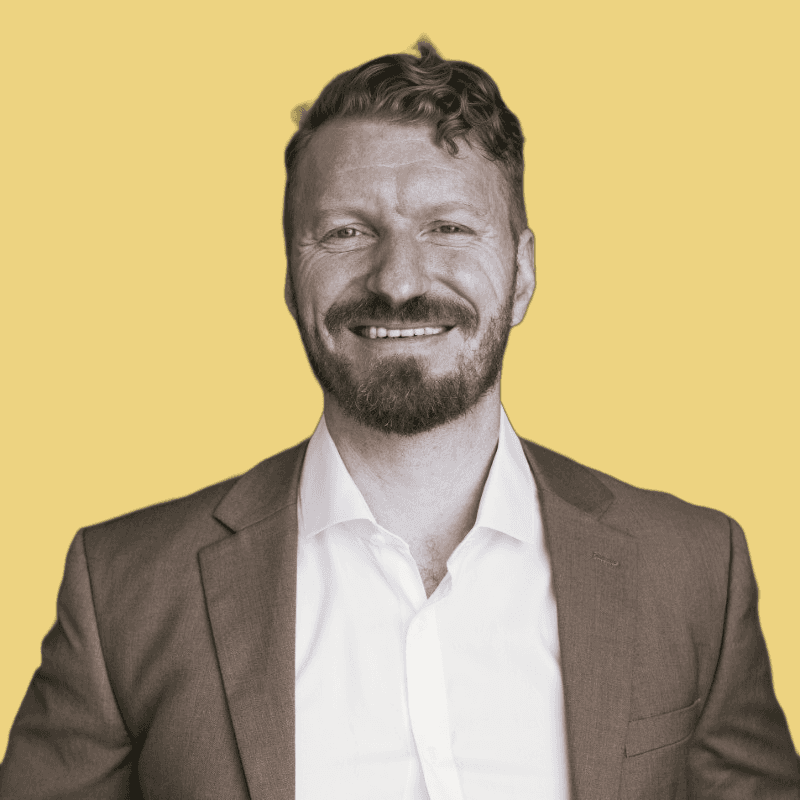
Interviewee: Kevin Brockland, Founder & Managing Partner of Indelible Ventures
Interviewer: Fuminori Gunji, Head of Marketing, ZooKeep
How a distressed debt analyst became one of Southeast Asia's most thoughtful early-stage investors and why he bet on ZooKeep.
Origins | How background and early experiences shaped an investment mindset
Q: What initially attracted Kevin Brockland to finance and the CFA path, and what personal or family influences played a role in that decision?
Kevin Brockland's entrepreneurial instincts emerged early, perhaps too early for his middle school administrators' comfort.
"I was buying candy in the supermarket and trying to resell it on school grounds," Kevin recalls with a laugh. "The school did not appreciate my doing that. I was competing with their vending machines, which was a source of revenue for them. They had the monopoly, and I was not sanctioned to operate in that arena."
Growing up in a small town in Missouri, Kevin was surrounded by a blue-collar work ethic that valued getting things done. His mother worked as an accountant at a crane and hoist company. His father's career trajectory was particularly fascinating, starting as a long-haul truck driver before landing at McDonnell Douglas, where he programmed machines to cut metal using now-extinct languages like Fortran and COBOL.
"It's kind of funny," Kevin notes. "When he'd answer his phone at the office, he'd say 'Programming Department,' but he never once in his life owned a computer until after he retired."
Despite this household environment, Kevin remembers being fascinated by programming simple narrative games on an Atari keyboard with his brother using Basic, which probably influenced his decision to pursue computer science at university in 2001, but the perception of IT departments as "locked in the dungeon in the basement" made him reconsider.
"I'm fairly introverted, but I'm not a 'put them in the dungeon' sort of guy," he explains. The switch to finance proved to be life-changing, setting him on a path that would eventually span multiple continents and various asset classes.
The 2008 Financial Crisis | Lessons learned from working with distressed assets
Q: Your journey from Wall Street during the 2008 financial crisis to impact investing and eventually Malaysia seems quite unconventional. Was there someone whose perspective or actions sparked something in you that made you realize, "There's a different way to think about capital and impact"?
Kevin completed his graduate degree in 2008, right as the financial crisis hit, and found himself at Tiger Capital, working on distressed assets.
"If you think of any of the big bankruptcies that happened post-2008, we were involved in probably every single one of them," Kevin says. The firm even partnered with Carl Icahn in a failed bid for Blockbuster, a company whose name now evokes nostalgia for a bygone era of physical media retail.
But this baptism by fire became an invaluable education. "I had a front row seat in seeing all the painful cracks in a large number of companies," he reflects. "What I do now is primarily investing in B2B SaaS companies, and B2B SaaS is nothing but trying to solve the pain points of enterprises. I worked in a time period where I saw hundreds of companies going through the worst times of their lives. When things go bad, all the cracks appear."
This experience gave Kevin a unique lens for evaluating startups, the ability to differentiate between vitamins and painkillers, between nice-to-haves and mission-critical solutions.
One formative lesson from those Tiger Capital years came from his manager's radically outcome-focused approach. Kevin was preparing for a holiday and mentioned it in passing. His boss's response was blunt: "I don't care."
"He said, 'The only thing I care about is: is the work done or not? It's a binary—job done or job not done. If I have to have a conversation about how many holidays you're taking, what time you're in the office, it has nothing to do with any of those things. It has to do with whether or not the job is done. Because at the end of the day, that is the only thing that drives income statement impact.'"
This philosophy shaped Kevin's entire approach to work. "It was very rational. Do away with all this fluff of having to see you in the office whether you're playing solitaire on your laptop when I'm not looking. It still comes back to: is the job done or is the job not?"
Why Southeast Asia? | Choosing to build a venture career outside the U.S.
Q: Why is Malaysia strategically positioned as an efficient regional hub for venture capital investors targeting the Southeast Asian and ASEAN tech markets? / How has living and investing in Asia reshaped your perspective compared to investing from the U.S.?
Kevin's journey to Malaysia was not a sudden leap but a progressive migration toward earlier stages and more international markets.
After Tiger Capital, he joined a global investment fund with 17 funds across 19 countries, spanning China, Southeast Asia, Central Asia, South Asia, Eastern Europe, Latin America, and emerging Africa and Middle East markets. The role satisfied his wanderlust, that craving he'd developed during university programs in Europe that made him "never want to go back."
But there was a problem. "From a career progression standpoint, I was a portfolio manager overseeing things globally, which sounds all well and good. But it disconnected me from the actual interaction I liked, being on the deal team, being directly in contact with companies and founders."
The solution came when he took a regional role covering Latin America for an impact investing fund focused on early-stage edtech and medtech. He moved to Mexico City's Colonia Condesa, "the more Bohemian part of the city" as Kevin says, for the second time in his life, now as a married man.
Then serendipity struck. When the person covering Asia went on maternity leave, Kevin volunteered to fill in. "I was covering the two sides of the globe, very much a flip of the AM/PM in regards to working hours. I joked that my wife forgot what I looked like because I was never home."
After a year of this untenable pace, he had to choose. He opted for Asia.
The choice of Malaysia as his residency was actually quite practical: airport connectivity, cost of living, ease of settling in, and English language prevalence. "There were a number of comfort factors along with efficiency for a job that travels a lot. I don't have to do long flights, and I don't have to do connecting flights. Two things that really matter, if you travel a lot."
He's now been in Malaysia for eight or nine years, "the longest I've been in one place since my childhood home."
What Early-Stage Founders Often Get Wrong | Common misconceptions at the seed and pre-seed stage
The Hubris Trap: Why humility matters across stages of innovation
Moving from distressed debt to venture capital required more than just learning new skills, it demanded humility.
"The biggest hurdle is making sure you don't fall into the hubris trap, which is believing that just because I've done late stage, I know how early stage works," Kevin explains. "Corporate innovation teams are very difficult to execute well because of the same mental block, believing that because I know the mechanics of big business and managing complexity, innovation should be easy."
The antidote? "You really have to go in with the perpetual learner mindset and the humility that innovation inherently is new, and because it's new, you can't know it all."
This philosophy extends to his investment thesis. Kevin gravitates toward founders who bring multiple perspectives, either expat founders with fresh eyes on a new environment, or local founders who've lived, worked, or studied abroad. "The variation in perspective is key so that it's not that mono-lens approach."
Q: How can B2B SaaS founders distinguish between "vitamins" and "painkillers" to overcome the status quo of corporate change management? What's the Gap Between "investor-ready" and Being Ready??
"The status quo is quite powerful," he observes. "We always fall into having to compete with this perception of 'we've always done it this way.' As much as you can show value-proposition and do the economics of 'we can increase your revenue by 10%,' in anybody's mind it's always going to be leaning back to the learning curve and the change management aspect."
He offers the example of sales teams adopting a CRM for the first time. "Getting them to actually log data into the CRM is painful, breaking the habit of how people doing calls on the road manage information. It's probably one of the more dramatic examples of the behavioral aspect."
The question founders need to ask: "If it's not really broken, why fix it? Is my 10% increase in cost or revenue or both for the client really sufficient to justify the amount of time the client has to invest into their team, into change management, into training, into monitoring, into enforcement?"
Kevin believes many founders underweight what implementation looks like from the client's perspective. "If we sat in their shoes and thought about what implementation and onboarding was really like, if founders and startups can think in that perspective, we can make it so smooth and so easy. If you remove all the friction and you're only handing benefits, it becomes much more of a no-brainer."
People, Process, Product — In That Order | A framework for evaluating early-stage companies
Q: Why does the Indelible Ventures framework prioritize Process over Product in early-stage B2B SaaS diligence?
"I always get a lot of surprise about why I put the product last," he admits. "But it has to be held in the context of the stage we get involved in, which is a very early stage. The product is not finalized, it may pivot entirely, it'll evolve for certain."
By "process," Kevin doesn't mean rigid procedures. He means feedback loops. "What I'm mostly referring to are the mechanisms that enable short, iterative cycles built around the speed of information, the speed of reaction, and the quality of insights that enable better reactions. It's this constant cycle of action-results-learning, action-results-learning."
The indication he looks for: "Are founders and companies putting in place methods to capture data, talk to their customers, get feedback loops so they have better information? That enables companies to become more capital efficient."
And it all rests on people. "The only way those processes are going to be put in place, executed well, and evolved over time is if you have good people. People sit at the top because they're the decision makers, the builders, the visionaries."
A Darwinian Lens
At this point in the conversation, Fuminori Gunji, ZooKeep's Head of Marketing and the interviewer, offered his own point of view on this subject:
"That comment really resonates with me, I personally always think about how companies are also subject to the evolution theory of Darwin in a way. The organisms who can capture the change that's happening in their environment and then iterate on their DNA faster than others, those are the ones who survive. The ones who miss or fail to capture the change that's happening in the environment, they go extinct."
He continued: "I once read this poem (*1), I can't recall it perfectly, but it was basically saying something along the lines of: It is the sea that decides which ships will sink and which ships will keep sailing. It really doesn't matter what you are doing or what you think is the vision. At the end of the day, it's about ‘how well can you adapt your ship to the sea?’, the market environment."
(*1: It was not a poem but a quote from French philosopher, journalist, and pacifist Émile Chartier who said "It is the sea herself who fashions the boats, choosing those which function and destroying the others.")
Kevin affirmed this perspective: "I think that's a good analogy because the sea can be very unpredictable…"
Signal, Noise, and the AI Paradox
Kevin has concerns about usage of AI in investment decision-making, concerns that reveal his deep understanding of what makes outlier returns possible.
"These models are trained on data sets, which means they're probabilistic models based on training data. They're inherently geared toward the mean," he explains. "But investment outcomes are not intended to go toward mean reversion. We're interested in outlier focus. I don't want the mean, I want to identify the top 5%. There are still limitations where we can leverage AI but can't fully rely on it."
This connects to a broader insight about intelligence and bias. Fuminori recounts a recent conversation with an engineer who said, 'Regardless of AI or human intelligence, you cannot have intelligence without bias, because intelligence by definition is oriented towards certain values or something you're trying to optimize for.'
The key isn't eliminating bias, it's transparency or the awareness of biases. Said engineer further went on to say: ‘People using whatever product or AI just need to know what are the built-in biases. As long as you know that, that's fine. But you cannot build an AI without any bias, that doesn't make any sense because then you treat every information as neutral and equally valuable, and then you will not get an intelligent answer.’
Perspective on the Next Era | Why adaptability matters more than vision
Q: How do you think about startups through the lens of adaptation and survival in rapidly changing markets?
"Historically, most corporations analyze and make rational decisions based on resources," Kevin explains. "Is it a large enough problem to justify the resources required to build it? That's a simple comparison: how much time and resources does it require versus just buying a subscription for $200 a month versus having one headcount dedicated to maintaining it?"
AI changes the equation. "That calculus still remains, but the difference is in the amount of resources. We now have individuals that are more super-powered with what they can accomplish. What used to be a difficult feat from a resource standpoint can become more easily done."
But there's a catch. "Companies generally are not very good at the build side because it's not within their core competency. They really know their pain point, but they don't actually know how to build solutions. Many pain points are not the pure identifiable ones but the precedent factors buried underneath that require outside vision."
Kevin sees speed becoming democratized. "Speed used to be a very strong competitive advantage. Some teams could move at lightning speed while everyone else was running. Now speed still matters, but it's becoming more table stakes. Everyone's able to move really fast because there's very few developers I know that aren't using Claude Code or Codex or some combination."
This creates new defensive requirements. "If time to copy (a product) shortens, then the competitive landscape is no longer about first-to-market. It sticks onto competitive forces from day one, leading back to first principles of defensibility."
The path forward? "It's not just about creating a point solution that solves a painful enough problem. It's about how much you can integrate into workflows, how deeply you can go in regards to depth and nuance of the problem being solved."
Kevin is bullish on vertical AI "getting really nuanced into specific use cases" but skeptical of horizontal ERPs. "Many are not tailor-made to use cases. There's a whole industry of consultants that customize these systems. I think a lot of those will come under threat."
Despite AI's disruption, Kevin believes core principles of defensibility remain. "The logic around how hard it is to rip and replace software, source-of-record systems like ERPs and CRMs, still is viable for the future of SaaS and AI. They're so interconnected with so many facets of your organization that it's really hard to rip and replace."
The assignment for founders: "Build deeply integrated workflows that become indispensable, not superficial point solutions that can be easily replicated."
Why ZooKeep
Q: What made you think, "ZooKeep is where I will invest my energy and capital"? / What specific factors led Indelible Ventures to invest in the ZooKeep team?
"When I first met Casey, it was not under the idea of investment. He was making trips into Malaysia and was more like planting seeds to build a relationship. I think that's a very smart strategy. We just started getting to know each other. Each time he'd come in, we'd have a coffee, a conversation, and dig into his thinking."
What stood out immediately was Casey's domain expertise combined with intellectual humility. "He's a serial entrepreneur with a lot of domain expertise in HR from prior businesses. But moving into the tech side was more new. What I took away was exactly what we'd been talking about, domain expertise with conviction around a vision, but held loosely."
Kevin references the startup cliché: "Strong convictions, loosely held. You need conviction on the way things are going because you have to steer the ship. But you can't blindly stick to the conviction forever. When the facts change, you change your mind."
Their conversations revealed deep alignment on strategy, particularly around the Japan-Australia-ASEAN bridge and connecting markets with two-way talent flow. "That very much resonated with my thought process," Kevin says. "We aligned on a lot of viewpoints."
Q: Why do you believe ZooKeep’s service-plus-software model is especially effective in Asia? / What structural problems in the ASEAN and Japanese talent markets does ZooKeep uniquely address?
Kevin saw multiple compelling factors layered on top of each other.
First, the Japan opportunity stands alone. "Japan is not a core thesis for us. Southeast Asia/ASEAN is our core. But when I looked at ZooKeep, I saw strong justification on a Japan basis alone. When you look at all the contributing factors to changes undergoing in HR and talent, a lot of that is very palatable largely because the talent pool is shrinking, which makes margins go up for all players in the ecosystem."
Casey's pre-existing relationships in the market created competitive advantage. "From an outsider's perspective, Japan is a hard market to enter. If you already have pre-existing relationships from prior businesses where you can pick up the phone and talk to the same decision makers, you inherently have a competitive advantage over other market entrants."
This reflects Kevin's understanding of how Japanese business works: "There's a relationship-first, value-second approach. If I can't get past the relationship, it doesn't even matter what the value is, because the relationship is the foundation of trust. If I don't trust, then I don't trust the value."
Second, the service-plus-software model. "There's much more of a service element at ZooKeep, not just 'Here’s our tech product, and goodbye until your next bill is due.' We call it SaaS for a reason, that is software as a service. There should always be the two S's combined."
This is especially critical in Southeast Asia. "These economies are lower on digitalization. Most enterprises are not the most sophisticated from a technology perspective. There's a lot of willingness, but I think there's an inherent necessity for a service orientation when building any tech-enabled, tech-first business."
Third, the partner-based go-to-market. "ZooKeep is taking a partner approach to many markets here, I know the individuals Casey is partnering with in Malaysia. He was starting to develop those relationships when I was making the investment decision. So that gave me another layer of people I could talk to and help validate, and they all speak very highly of him which made it a much more viable investment decision case."
Looking Ahead | Long-term vision and impact
Q: How can ZooKeep fundamentally change how companies approach hiring and talent discovery over the next 5-10 years?
"There's still a long way to go in Southeast Asia. In Japan, it's a narrower pool, so discoverability and the ability to track over time become very important. In Southeast Asia, when you think of top-tier talent, the pool is relatively narrow, but there's also the challenge of portability, the magnetic force of Singapore that seems to suck a lot of talent out, or into Western countries and other OECD developed markets."
The result? "Talent ecosystems are very fragmented. This inherent fragmentation makes it challenging. If you're trying to fill roles in the traditional manner, you're inundated with non-applicable applications. The entire hiring process is just a major source of frustration for the vast majority of companies, it's an entirely broken system across each layer."
ZooKeep's differentiation goes beyond being just another ATS (Applicant Tracking System). "There's a lot of value on top of it, whether through what you guys are doing or through partnerships, services that can be plugged straight in so it's a seamless, one-stop-shop use case."
The strategic insight: "The differentiating factor is the approach around interoperability, the curation of what can be layered on top, plus the more service-oriented approach, which addresses a pain point that's why most companies are outsourcing."
Kevin also sees network effects. "As ZooKeep connects with partner organizations that are on the outsource layer, these partners also become users of ZooKeep technology and become advocates that push it downstream. That's an interesting go-to-market, but there's also a clear value proposition and demonstration of that being validated."
Imaginary Billboard Message
Q: If you could put one message on an imaginary billboard that every early-stage founder in Southeast Asia would see, what would that be?
"There's a saying I've always heard: If it was easy, everybody would be doing it," he says. "Startups are hard, but it's hard for a reason. Hard work, bigger payback. If it was easy, less or no payback."
His hope for what founders take away? "The perpetual learner mindset. The humility to know you don't have all the answers, combined with the conviction to steer the ship, but the flexibility to change course when the facts change.”
Q: For founders in Southeast Asia who want to understand what makes them truly investor-ready, or for emerging fund managers looking to build in developing ecosystems, what's the best way to connect with you?
"Anyone can find me, Kevin Brockland CFA on LinkedIn. That's probably the best way," he says. But there's a caveat: "If you're going to do a connection request, put a message inside it. Don't just click connect, because I get a lot of connection requests and you may get buried with spammy AI business ones. You need to stand out by putting a message. I look at the messages, and if they make sense in regards to connecting, that's the best way."
Kevin Brockland, CFA, is an early-stage investor focused on B2B SaaS companies across Southeast Asia. He's an investor in ZooKeep and an active advisor to portfolio companies across the region. Connect with him on LinkedIn.
Bonus Questions
Q: Are there any books, articles, or any other form of content that fundamentally changed the way you think? Who introduced you to that idea or resource, and why did it resonate so deeply with you?
Kevin recommends three books that have shaped his investment philosophy:
"Reflexivity" by George Soros - "It talks about feedback loops and how they impact economic outcomes. A little bit like a self-fulfilling prophecy. There's this interaction between the factual and the behavioral. It plays well with how I view startups: Can we make outcomes inevitable? It also puts a lens on separating hype from reality."
"The Mom Test" by Rob Fitzpatrick - "Think of yourself as a kid bringing home your art project from school. What does your mom tell you? 'Oh, this is the most amazing thing I've ever seen!' But you're not good, and it's not good. It's an interesting book about building frameworks to separate signals from noise when talking to customers."
"Buy Back Your Time" by Dan Martell - "It's more geared toward the FIRE mentality, financial independence, retire early, but there's a lot of applicability for startups. Think of your time as a limited resource and that you're buying it back. It's the opportunity cost of hiring somebody to fulfill a task, even an executive assistant or virtual assistant. Why spend $500 a month? Because with the time freed up, I can create a value of $5,000 or $10,000 or $50,000 a month. It's about putting it in a different framing and context."