

Interview | Jordan Jarjoura: from Google to ZooKeep


From Ohio to Tokyo: A Journey Rooted in Curiosity and Craft
Before he ever built software for recruiters, Jordan Jarjoura learned the language of systems through food.
Growing up in Kent, Ohio (United States), a quiet university town, Jordan was surrounded by two powerful influences: his father, a PhD biostatistician working in medical research, and his mother, an early-childhood education specialist managing daycare centers. Add to that a rich Lebanese heritage filled with family gatherings, storytelling, and shared meals and it’s no surprise that Jordan’s worldview grew from the intersection of people, meticulous process, and purpose.
While he once dreamed of becoming a chef at a restaurant, his curiosity for patterns and improvement pulled him toward statistics. In college, he merged creativity and logic: applying Toyota Kaizen principles he learned in college to an Italian restaurant’s operations where he was jobbing as kitchen staff, he redesigned ingredient workflows and cut food costs by nearly 30%. That mix of analytical discipline and practical problem-solving would later become the hallmark of his career.
Discovering Talent Acquisition: Where People Meet Systems
After moving to Japan, Jordan’s first professional chapter began in HR and operations at a large English-teaching organization. There, he digitized scheduling and workforce management processes long before “HR digital transformation” became a buzzword.
His next move took him back to Silicon Valley, where he experienced the intensity of agency recruiting focused around sourcing and introducing software engineers and game designers to clients. But it was in the video-game industry, working at Square Enix, where he found his calling: connecting exceptional creative talent that shaped organizational culture and eventually, the products. “You could see the impact of hiring decisions directly in the games that shipped,” he recalls.
“That taught me recruitment is not about filling jobs. It’s about shaping outcomes of the organization.”
Building Scalable Hiring Systems at Google
Jordan’s seven-year tenure at Google Japan placed him at the heart of one of the world’s most data-driven recruiting machines. Leading engineering hiring across Japan and Korea, he faced the near-impossible challenge of sourcing bilingual iOS developers at the dawn of the mobile-app era.
At Google, he learned what makes recruitment systems succeed at scale: clarity, alignment, and simplicity. “Every great recruiter has their own style,” he says, “but the framework — pipeline, assessment, offer, onboarding — must be standardized enough so that you can learn from data.” He also witnessed how easily recruitment can lose efficiency when business goals and hiring process design drift apart: “Recruiting actually functions like sales, but very often without a CFO’s discipline. Too often, TA teams chase activity KPIs instead of impactful business results.”
His experiences also extended beyond hiring. During the covid pandemic years, Jordan joined Google’s global COVID-19 task force, coordinating hiring continuity and visa logistics of employees under extreme disruption — it turned out to be a masterclass in resilience and process design.

Why ZooKeep — Redefining the ATS as a Change Engine
There were three major factors that drew me to join Zookeep.
First, the opportunity to solve problems for multiple companies.
At Google, the hiring volume fluctuated significantly from year to year, yet they couldn't flexibly adjust the team size. Due to Japanese labor law constraints, he had to maintain the same staffing whether they were understaffed or had excess capacity.
This made him think, "It would be great to bring in a skilled recruiter for just 8-10 months when needed." At Zookeep, he could take a consultative approach, truly understand each company's challenges, and focus on genuine problem-solving rather than just providing recruitment resources. That was extremely appealing to him.
Second, improving recruitment technology.
At the time, even Google's ATS was difficult to use. The internal system was so overly complex that even experienced recruiters felt like they were sitting in an airplane cockpit without being a pilot. Jordan couldn't search for candidates properly and sometimes had to write scripts in Excel to sort data. He had tried other tools on the market, such as Jobvite, Bullhorn, and others but none were satisfactory. Zookeep offered the opportunity to finally create simple, efficient tools that everyday recruiters could use intuitively.
Third, addressing challenges unique to the Japanese hiring market.
Japan still has a strong culture of new graduate hiring and lifetime employment, with insufficient infrastructure for mid-career recruitment. From his experience struggling to hire iOS engineers at Google, he sensed this problem would intensify after COVID. With growing demand for cloud technology and SaaS platforms, Japan lacked the foundation to support it. Having lived in Japan for a long time, supporting the Japanese hiring market was something he felt personally passionate about.
These three elements—problem-solving opportunities, technology, and contributing to the Japanese market—came together, and that's what made working at Zookeep so attractive to Jordan.
“Most ATS tools are workflow checklists or even mere ledger for candidates” he explains. “They store data, but they don’t help you make better hiring decisions or build talent acquisition capabilities.”
At ZooKeep, he’s leading the evolution of the product beyond a typical ATS toward a Talent Acquisition Platform that integrates global HR technologies yet localizes deeply for Japanese enterprise realities. His guiding philosophy: simplify everything that stands between great recruiters and great hiring outcomes.
When evaluating technologies to integrate, Jordan looks for three things:
Evidence-based impact on recruiter performance,
Seamless interoperability with other tools, and
Cultural adaptability — bilingual UI, transparency, and clarity of UIUX for Japan’s unique team workflows.
Lessons from Enterprise Transformation — Woven by Toyota's Case
Jordan also brings consultative depth from projects with clients like Woven by Toyota (*), where he helped the TA organization to strengthen direct hiring and reduce dependency on agencies.
“The key levers were always clarity and ownership,” he notes. “Once hiring managers understood how roles, metrics, and communication loops fit together, the team could move faster with less friction.”
(* Woven by Toyota will help Toyota to develop next-generation cars and to realize a mobility society in which everyone can move freely, happily and safely.)
The Future of Talent Acquisition: Beyond the AI Hype
Asked about the future of recruiting, Jordan is both optimistic and grounded.
“AI won’t replace recruiters, it’ll replace bad recruiting habits,” he says with a smile. “Automation should handle administrative noise so recruiters can focus on relationships, storytelling, and problem-solving.”
For him, as the Head of Product at ZooKeep, the real transformation lies not in generative tools but in standardization and increasing data literacy of recruitment stakeholders: the ability of recruiters and hiring managers to speak a shared operational language, just as sales teams once learned to work with "Salesforce.com the model" for example to reorganize their teams and functions accordingly before even operating the software.
A Guiding Principle: Efficiency Equals Success
Efficiency, he emphasizes, is NOT about speed alone. It’s about alignment, communication, and clarity. Values drawn from both Toyota Kaizen philosophy and years in high-performance organizations. “Recruitment has endless improvement potential if approached systematically,” he says. “Every interaction, from briefing to feedback loop, can be a step toward operational excellence.”
When asked what message he’d put on an imaginary billboard visible to every TA leader in Japan and ASEAN, his answer comes without hesitation:
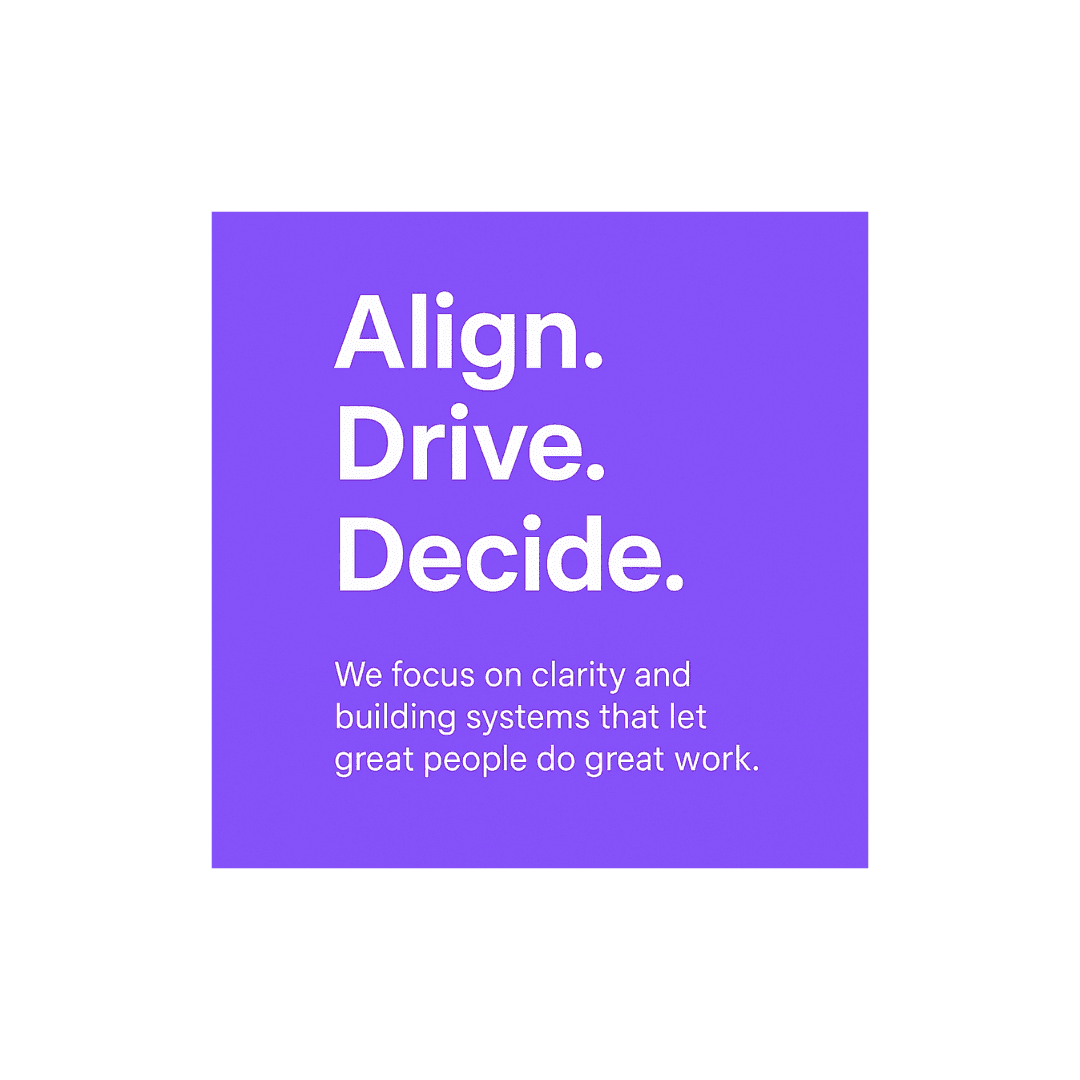
“Focus on clarity. Build systems that let great people do great work.”
Closing Thoughts
Jordan’s story is a blend of craft, discipline, and empathy. From optimizing restaurant kitchens to reshaping enterprise hiring. It’s a reminder that recruitment, at its best, is both art and science that shapes organizations and impacts their outputs.
And at ZooKeep, that mindset is shaping the next generation of Talent Acquisition technology, one impactful improvement at a time.
Jordan Jarjoura: https://www.linkedin.com/in/jjarjoura/
